
How to Scrub a Call List Before You Dial: A 5-Step Checklist
Oct 28, 2026 · 7 min read · TCPA Firewall Team
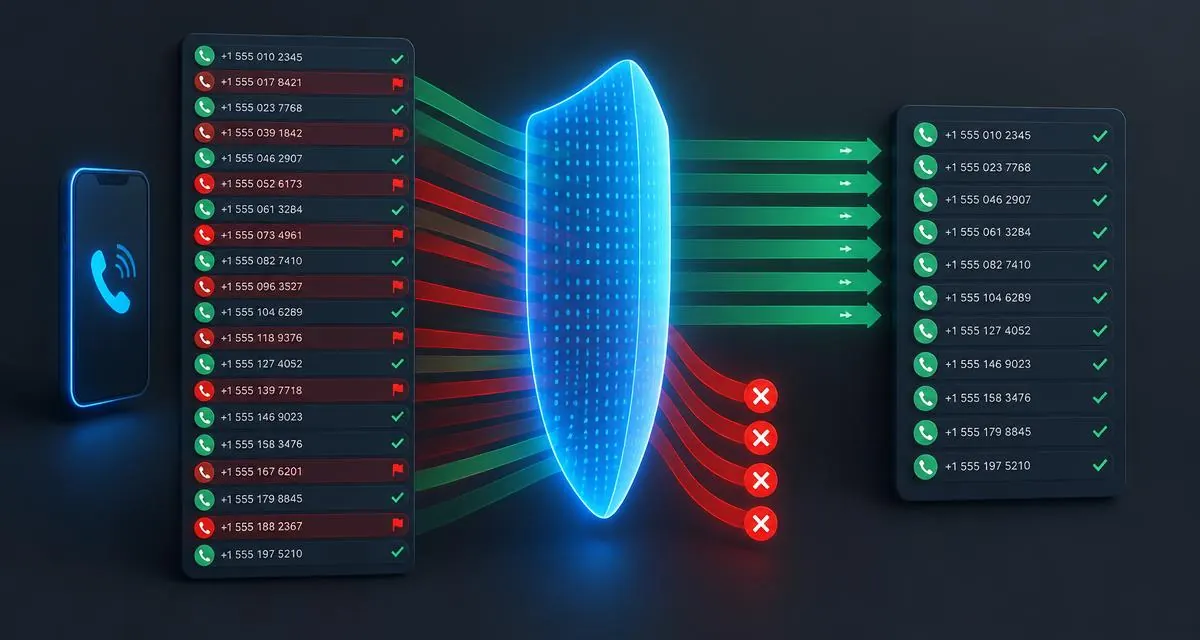
"Scrubbing" a list means removing or flagging numbers you shouldn't call before a campaign starts. Done well, it lowers your legal exposure, saves dialer minutes and makes your contact rates more honest. Here is a five-step process any team can run.
Step 1: Normalize every number
Before you check anything, put every number in the same format. Strip spaces, dashes, parentheses and country codes, and drop anything that is not a 10-digit US number. Remove duplicates at this stage so you don't pay to screen the same number twice.
- Keep the original value next to the cleaned one for your records.
- Log how many rows were invalid — a high rate says something about the source.
Step 2: Screen for litigator and complaint signals
This is the step most directly tied to lawsuit risk. Check each number against the litigator and complaint lists available to you and decide in advance what happens to a match:
- Suppress automatically, or
- Route to a manual review queue, or
- Allow only with documented, verifiable consent.
Write the rule down. Consistency is what turns a scrub into a defensible process.
Step 3: Catch fake and dummy numbers
Lead forms collect a surprising number of made-up entries: 555-01xx reserved numbers, five identical digits in a row, repeating pairs and simple sequences like 123-4567. They waste dial attempts and they are a warning sign about the source's consent quality. Flag them and track which vendors send the most.
Step 4: Check line type and region
Line type matters because consent rules differ. Autodialed or prerecorded calls to mobile numbers generally require prior express consent, and marketing calls of that kind require prior express written consent. VoIP numbers can belong to anyone from a business to a disposable app.
Region matters because calling hours are measured in the recipient's local time. A number's state and area code give you an estimated time zone so your dialer can respect calling windows.
Step 5: Keep records
A scrub you can't prove is a scrub that didn't happen. For every list, keep:
- The date and time of the screening.
- Which lists were checked and what was flagged.
- What you did with flagged numbers.
- Where the consent for each remaining number came from.
TCPA Firewall stores every lookup in your history, so you can export results and show what was checked and when.
How often to scrub
Lists go stale. Litigator lists grow, numbers are reassigned and new complaints appear. Scrub every list right before a campaign, and re-scrub lists you reuse on a regular schedule — weekly for active lists is a good starting point. For real-time lead flows, screen each number through an API as it arrives.
This article is for general information and is not legal advice.
Screen your list before the next campaign
Litigator signals, carrier, line type and region in one lookup. Credits never expire.